
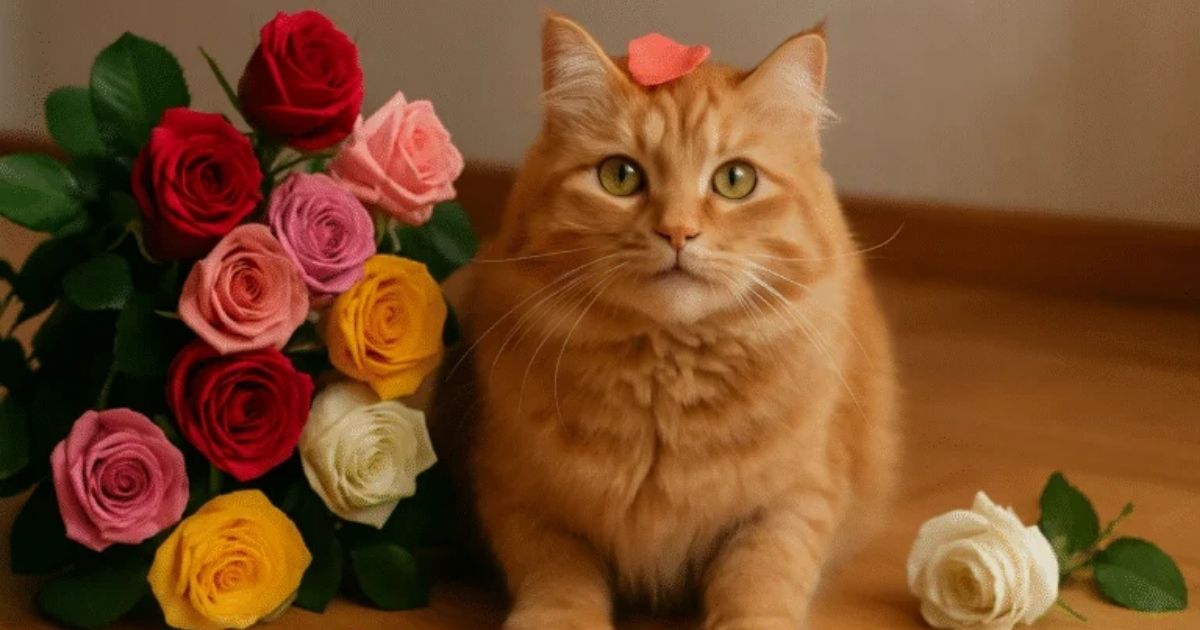
You’ve just received a gorgeous bouquet of roses. You set them on the coffee table, and within minutes, your cat is sniffing around the vase, pawing at the petals. Sound familiar? If you’re a cat owner, this scenario probably makes your stomach drop a little. You want your home to feel beautiful, but not at the cost of your cat’s health.
Roses are timeless symbols of beauty, love, and celebration, but if you share your home with a curious cat, you might wonder whether keeping a bouquet around is safe. Cats can’t resist batting at leaves or nibbling on petals, which can leave pet owners concerned. Are roses truly toxic to cats, or are they just a harmless decoration?
The short answer might surprise you. But the full picture is a lot more nuanced than a simple yes or no. In this guide, we’ll explore how roses may affect your cat’s health, what to do if your feline friend munches on a bloom, and which plants you should keep well out of reach.
Are Roses Toxic to Cats?
Here’s some genuinely reassuring news. According to the American Society for the Prevention of Cruelty to Animals (ASPCA), true roses, those belonging to the genus Rosa, are not considered toxic to cats. That means if your curious kitty nibbles on a rose petal or two, you probably don’t need to sprint to the emergency vet.
However, “not toxic” doesn’t mean “completely harmless.” There’s an important distinction there that a lot of pet owners overlook. Roses can still cause discomfort, minor injury, and even secondary health issues depending on how your cat interacts with them. The plant itself won’t poison your cat, but the whole rose, thorns, preservatives, pesticide residue, and all, is a different story.
Think of it this way. Eating a bag of potato chips isn’t toxic, but it’s not exactly good for you either. Roses sit in a similar grey zone for cats. They’re not on the “dangerous” list, but they’re not on the “go ahead and let your cat munch freely” list either.
Understanding the full scope of rose-related risks helps you make smarter decisions about where you place flowers in your home and how closely you supervise your pet around them.
Potential Health Risks of Cats Eating Roses
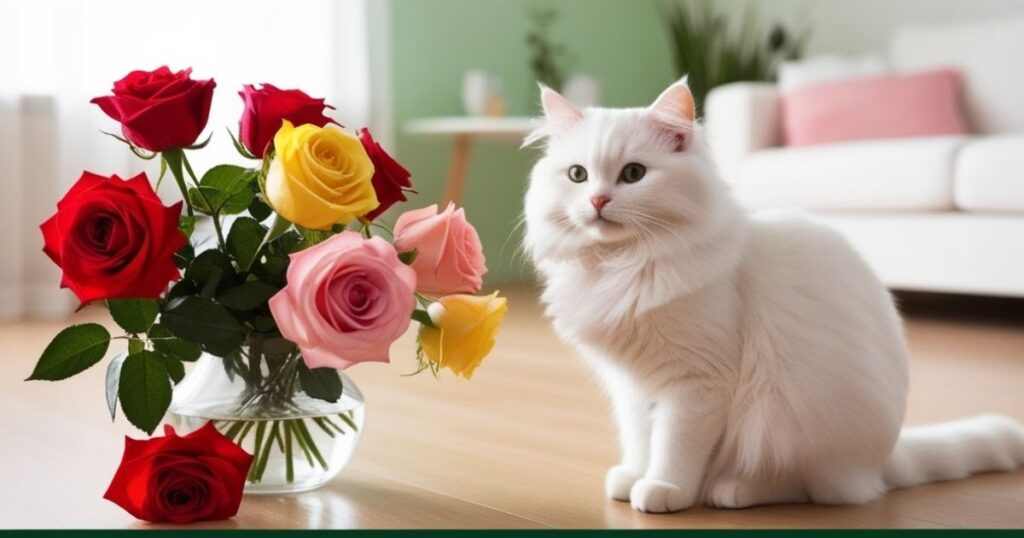
Even though roses don’t contain compounds that are acutely toxic to cats, there are several ways they can still cause harm. Let’s walk through each one honestly.
Read Also: Is Cinnamon Bad for Dogs? Safety, Risks, and Vet Advice Every Owner Should Know
Gastrointestinal Upset
The most common issue cat owners report after their pet chews on rose petals is feline digestive upset. Cats have sensitive digestive systems. They’re obligate carnivores, which means their gut isn’t really designed to process plant matter efficiently. When a cat eats rose petals or leaves, it often leads to cat stomach irritation, vomiting, or loose stools.
It’s usually mild and resolves on its own within a few hours. But if your cat is vomiting repeatedly or seems lethargic after chewing on flowers, that’s your cue to call the vet. Cat vomiting after flowers isn’t always serious, but it’s never something to fully brush off either. Keep an eye on how much they ate and how quickly symptoms appear.
Risk of Injury from Thorns
This one is easy to underestimate. Rose thorns can cause real, physical injury to a cat’s mouth, paws, or throat. Imagine a cat gnawing on a rose stem and swallowing a fragment of a thorn. That’s not just uncomfortable, it can cause lacerations in the mouth or digestive tract. Thorns causing cat mouth injuries are more common than most owners realize.
If you notice your cat drooling after chewing plants or pawing at their mouth repeatedly, that’s a sign something may have irritated or scratched the inside of their mouth. Rose stem injuries are particularly sneaky because the damage isn’t always visible from the outside.
When you bring cut roses into your home, trimming the thorns isn’t just an aesthetic choice. It’s genuinely a safety measure for your cat.
Chemical Residue from Pesticides or Preservatives
Here’s where things get a little more serious. Many commercially sold roses, especially those from florists or grocery stores, have been treated with pesticides, fungicides, or chemical preservatives. These substances are not safe for cats to ingest. Pesticides and pets are a dangerous combination, full stop.
The little packet of flower food that comes with a bouquet? That can also contain chemicals that irritate a cat’s digestive system. Are rose preservatives dangerous for cats? In meaningful amounts, yes, they absolutely can be. Cut rose precautions should always include keeping the vase water out of reach, since cats sometimes drink from flower vases and end up ingesting those dissolved preservatives directly.
When in doubt, treat commercial roses as potentially contaminated and keep your cat away from them entirely.
Roses vs. Toxic Look-Alike Flowers

This is where cat owners really need to pay close attention. While roses themselves are relatively safe, several flowers that look similar to roses are profoundly toxic to cats. The visual similarity between safe and dangerous flowers is one of the most overlooked garden plant hazards for cats.
Florists and decorators often mix various blooms together in arrangements. A bouquet that looks like it’s “just roses” might actually contain lilies, which are extraordinarily toxic to cats. Even a small amount of lily pollen can cause acute kidney failure in felines. That’s not an exaggeration. It’s one of the most dangerous toxic bouquet plant situations a cat owner can face.
Knowing which flowers look like roses but are toxic is critical knowledge for any cat owner who loves having flowers around the home.
Toxic Flowers Often Mistaken for Roses
Several common flowers share a superficial resemblance to roses but carry serious health risks for cats. Here are the ones you need to know by name.
Lilies are the most dangerous. This includes Easter lilies, tiger lilies, and daylilies. All parts of the plant, the flower, leaves, stem, and even the pollen, are severely toxic to cats and can cause rapid kidney failure. Peonies are another one. They contain the compound paeonol, which can cause vomiting and diarrhea in cats. Ranunculus, also called buttercups, contain irritating compounds that cause drooling, vomiting, and skin irritation. Begonias are commonly found in garden arrangements and are mildly to moderately toxic to cats. Camellia flowers have a rose-like appearance but can cause digestive distress if ingested.
If you’re putting together a floral arrangement at home or receiving one as a gift, always identify every single flower in the bouquet before placing it where your cat can reach it. This is non-negotiable.
What to Do If Your Cat Eats a Rose
Stay calm. That’s the first thing. If your cat has eaten a true rose petal or two, the risk level is low. But there are still steps you should take to make sure everything is fine.
Monitor for Symptoms
Watch your cat closely for the next 12 to 24 hours. Mild gastrointestinal symptoms like vomiting once or twice or soft stools are common and usually resolve without intervention. However, if you notice any of the following, take it seriously.
Repeated vomiting that doesn’t stop. Significant lethargy or unusual tiredness. Cat drooling after chewing plants that persists. Difficulty swallowing or signs of a mouth injury. Loss of appetite that lasts more than a day. Cat lethargy from plant ingestion can sometimes indicate that something more significant is going on, especially if your cat consumed parts of a flower you haven’t been able to fully identify.
How long to watch a cat after eating roses is generally 24 hours for mild cases. But if symptoms escalate or you’re unsure what they ate, call a vet sooner rather than later.
Contact Your Veterinarian for Guidance
When in doubt, call your vet. That’s always the right move. Veterinary advice for cats eating roses is straightforward in most cases, roses themselves pose minimal risk, but the context matters enormously. What else was in the arrangement? Were the roses treated with chemicals? Did your cat eat a lot or just a nibble?
Your vet may ask you to bring in the flower or a photo of it so they can confirm the species. They might also recommend monitoring at home or bringing your cat in for an examination if symptoms seem concerning. Pet hospital advice is always worth seeking when you’re unsure, because early intervention in genuine poisoning cases can be life-saving.
Don’t try to induce vomiting at home unless your vet explicitly instructs you to. It can sometimes cause more harm than good, especially if thorns or stem fragments are involved.
Cat-Safe Alternatives to Roses
If you love having flowers around but you’re genuinely worried about your cat’s safety, and honestly, that’s a perfectly reasonable concern, there are plenty of beautiful, pet-friendly plants you can choose instead.
Pet-Safe Flowers to Consider
Some genuinely lovely cat-safe flowers include snapdragons, which are completely non-toxic and come in stunning colors. Orchids are elegant, popular, and safe for cats. Sunflowers are cheerful and non-toxic. Lisianthus is a beautiful cut flower that doesn’t pose a risk to cats. Celosia, also called cockscomb, is non-toxic and visually striking. Statice and waxflower are commonly used as filler flowers in bouquets and are both safe for cats.
These safe floral alternatives let you keep your home looking beautiful without the anxious glances at your cat every time they wander near the flower vase. You can also explore artificial flowers for cats as a completely risk-free option, though obviously nothing quite replaces the beauty of fresh blooms.
Safe Ways to Display Roses in a Cat-Friendly Home
If you’ve decided you still want roses in your home, and that’s a completely valid choice, there are smart ways to do it that significantly reduce the risk to your cat.
Place roses in rooms your cat doesn’t have access to. A home office with a closed door or a guest room your cat doesn’t frequent are great options. Elevate arrangements on high shelves that your cat genuinely cannot reach. Some cats are Olympic-level climbers, so be realistic about what counts as “out of reach.” Use heavy, stable vases that can’t be knocked over. A tipped vase spills preservative-laced water everywhere, and a curious cat will absolutely investigate the puddle. Always trim thorns before displaying roses. Remove fallen petals immediately. A stray petal on the floor is an invitation for sniffing and chewing. Change vase water daily to reduce chemical buildup. Indoor flower arrangement safety is largely about removing temptation and reducing exposure consistently over time.
Pet-friendly home décor doesn’t mean giving up flowers entirely. It just means being thoughtful about placement and preparation.
When Caution Matters Most
There are specific situations where you need to be extra vigilant. Kittens are naturally more curious and more likely to chew on things indiscriminately. They’re also smaller, so even a small amount of irritant or chemical residue can have a bigger impact on their system.
Senior cats with pre-existing kidney or liver conditions are also at higher risk. A plant-related irritant that a healthy adult cat shrugs off might hit harder for an older or medically compromised pet. Additionally, if your cat has a history of gastrointestinal sensitivity, even mild plant irritation could trigger a more pronounced response. Know your cat’s health history and adjust your level of caution accordingly.
Understanding Why Cats Are Attracted to Roses
It’s worth understanding why cats go for flowers in the first place. It’s not random. Cat behavior around plants is driven by several natural instincts that are deeply wired into their biology.
Common Cat Behaviors Around Plants
Cats are sensory explorers. They investigate their environment primarily through smell, then taste. The strong fragrance of roses is genuinely appealing to many cats, which is why they’ll sniff and then inevitably try a nibble. Some cats chew on plants as a form of play or to relieve boredom. Others seem to do it as a way of seeking out fiber or roughage, even though their digestive systems can’t handle it well.
Indoor cats especially tend to be drawn to any green or floral element in the home, simply because it represents something novel and interesting in an otherwise familiar environment. Understanding this helps you anticipate the behavior rather than just reacting to it after the fact.
Preventing Accidental Ingestion Indoors and Outdoors
Prevention is always better than a late-night vet call. There are practical, effective strategies for both indoor and outdoor settings. Indoors, you can use cat supervision tips like placing orange peel or citrus spray near your flower arrangements, since most cats dislike citrus scents and will naturally avoid the area. Double-sided tape around the base of a vase or on the surface near it can also deter curious paws. Cat-friendly gardening tips for outdoor spaces include placing rose bushes in sections of the garden your cat doesn’t typically roam. Rose bush placement for cat safety is really about using natural barriers or garden design to create separation.
If your garden has a mix of plants, regularly walk the space and identify anything that might pose a risk. Cat reactions to rose leaves or hips can vary, and some cats are more persistent than others when it comes to garden exploration. Rose hip toxicity is worth noting too, while not severely dangerous, rose hips can cause gastrointestinal discomfort if eaten in larger quantities.
Preventing cats from nibbling flowers ultimately comes down to a combination of environmental management, consistent supervision, and providing your cat with enrichment so they’re less likely to seek stimulation from plants.
Signs Your Cat May Have an Unusual Sensitivity
Some cats react more strongly to plants than others, even non-toxic ones. If your cat has ever shown an unusual reaction to a plant that’s considered safe, it’s worth noting that individual sensitivities exist. Signs that your cat might have a heightened sensitivity to roses or other plants include persistent drooling after a very small exposure, swelling around the mouth or face, sneezing or watery eyes near the arrangement, and skin irritation if they’ve rubbed against the stems.
These signs don’t necessarily mean the plant is toxic, they might simply mean your specific cat has a sensitivity to that plant’s compounds. Always document these reactions and share them with your vet, so you can build a clearer picture of what plants are safe for your individual pet.
Final Thoughts
Roses won’t send your cat to the emergency room, but they’re not entirely worry-free either. Thorns, pesticide residue, and preservative-laced vase water can all cause real discomfort. Staying informed is the best thing you can do as a pet owner.
The good news? With a few simple precautions, you can enjoy beautiful flowers and keep your cat safe at the same time. Trim the thorns, place arrangements out of reach, and always identify every flower in a bouquet. When something feels off, trust your instincts and call your vet. Your cat’s safety is always worth that extra step.

Caleb Ford is pet enthusiast and content strategist who blends real-world pet care experience with digital expertise. He’s known for crafting reliable, research-based articles that inform and inspire pet owners. Caleb’s approach centers on transparency, compassion, and trust key pillars of authentic EEAT-driven storytelling in the pet industry.