Naming a spider may feel a bit unusual at first. However, for pet owners, gamers, and creative writers, it’s actually quite common and meaningful. Whether you’re naming a real pet spider, a game avatar, a character in a children’s story, or even part of a school project, giving a spider a name adds a personal touch and makes the experience more engaging. The wide range of spider names reflects both the many species found around the world and the endless creativity of people.
From spooky to adorable, and from playful to elegant, spider names offer plenty of variety. Some are inspired by myths and legends, while others come from pop culture or nature. Many names simply come from a spider’s appearance, behavior, or unique personality. This guide explores different naming styles to help you find the perfect name for your web-spinning companion.
Why People Search for Spider Names
It starts with curiosity. Then it becomes something more personal.
When someone types “spider names” into a search bar, they’re usually in one of a few situations. Maybe they just bought a jumping spider and want something better than “Spider.” Maybe they’re writing a story and need a name that carries weight. Or maybe they’re building a gaming persona and want something that sounds fierce, cool, or genuinely original.
The truth is, naming a spider is no different from naming a cat or a dog. It creates a bond. It gives the creature, or the character, an identity. And on platforms like TikTok and Instagram, a spider with a great name gets more attention, more shares, and more love from the community.
Tarantula owners especially have built entire online followings around their pets. Names like “Duchess,” “Cinder,” or “Cobalt” show up in comment sections with hundreds of reactions. People connect with names. They remember them. They repeat them.
So whether you’re naming for fun, for function, or for full-on fandom, the name matters more than you’d think.
Read More: Deer Names: 255+ Cute Ideas for Bucks & Fawns
Categories of Spider Names
Not all spider names come from the same place. Some feel soft and sweet. Others feel dark and dramatic. The best way to find your perfect match is to explore each category and see what resonates. Here’s a full breakdown.
Cute Spider Names
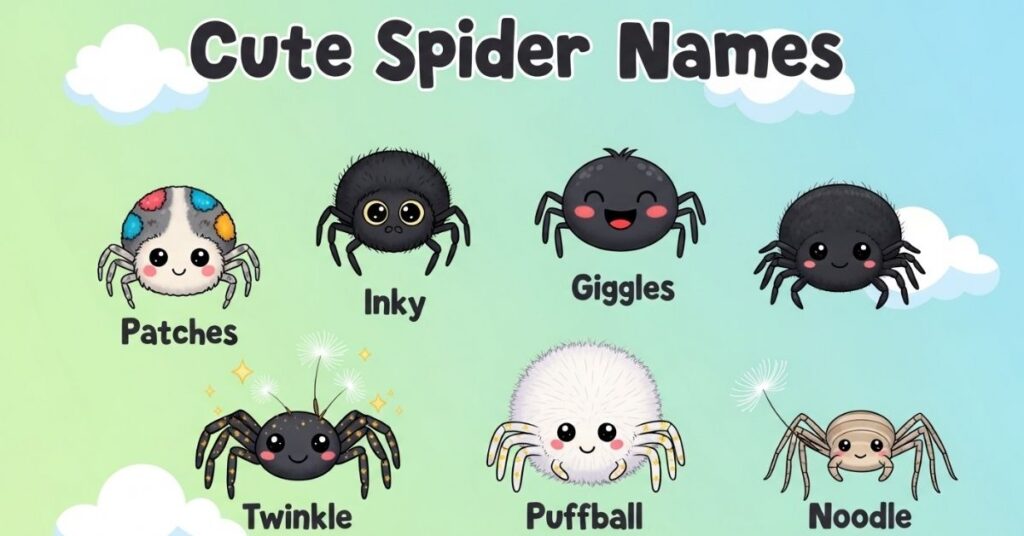
- Mochi – soft, round, and oddly fitting for a chubby little spider
- Pudding – sweet and a little wobbly, great for slow-moving species
- Biscuit – warm, cozy, and impossible not to love
- Pebble – tiny and quiet, perfect for a petite spider
- Dewdrop – delicate and poetic, ideal for pale or translucent spiders
- Fluffkin – made for the fuzziest tarantulas around
- Nibble – playful and light, suits a quick little jumper
- Cottonball – for spiders that look almost too soft to be real
- Sprout – small, new, full of potential
- Waffles – quirky and fun, always gets a smile
- Tinsel – shiny and delicate, lovely for silver or white species
- Marshmallow – squishy name energy, great for round-bodied spiders
- Doodle – playful and spontaneous, suits an energetic jumper
- Cinnamon – warm-toned and spicy, fits reddish-brown spiders beautifully
- Bubbles – bubbly personality, perfect for an active, curious spider
Cute names work best when there’s a visual contrast, the tinier or fuzzier the spider, the more a sweet name lands.
Funny or Punny Spider Names
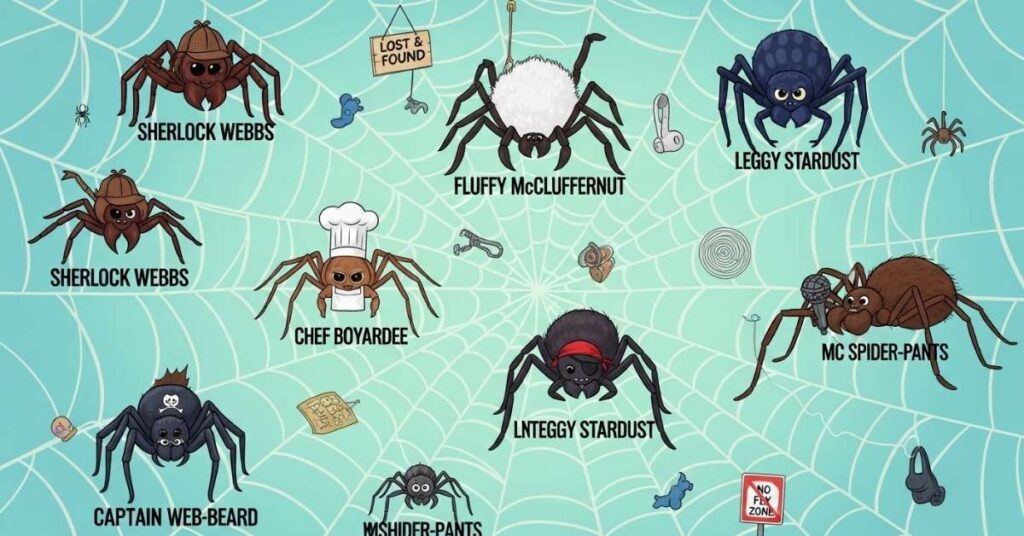
- Webster – the original spider pun, still earning laughs
- Sir Crawls-a-Lot – for the spider that never sits still
- Eight Baller – a nod to eight legs and pool table energy
- Leggy Smalls – a hip-hop twist that never gets old
- Spidey McSpiderface – internet humor at its finest
- Tanglefoot – for the spider that trips up its own web
- Countula – a vampire-spider crossover nobody asked for but everyone needs
- Web MD – for the spider that diagnoses your anxiety just by existing
- Hairy Houdini – for the escape artist tarantula that always goes missing
- Crawl Rove – a Karl Rove pun that political nerds will appreciate
- Spindlethwick – sounds ridiculous, feels perfect
- Webmaster General – for the spider who runs the whole operation
- Incy Wincey – a nostalgic throwback that still holds up
- Fuzzbucket – affectionately absurd for any fluffy tarantula
- Lord Legsalot – regal, ridiculous, and absolutely unforgettable
The funnier the name, the more memorable your spider becomes, especially online.
Spooky & Mythical Spider Names
- Arachne – the original. From Greek mythology, a mortal weaver turned into a spider by the goddess Athena. Timeless and powerful.
- Nyx – Greek goddess of the night. Short, dark, and elegant.
- Shadowfang – dramatic and fierce, great for large dark species
- Morrigan – Celtic goddess associated with fate and mystery
- Dusk – quiet and ominous, like the hour before dark
- Obsidian – volcanic black glass. Perfect for jet-black spiders.
- Vesper – Latin for evening star, carries an eerie beauty
- Crypt – short, blunt, and deeply unsettling in the best way
- Raven – classic dark symbolism, works across cultures
- Lilith – rooted in ancient mythology as a figure of independence and darkness
- Grimoire – named after the book of spells, for a spider that feels magical
- Sable – means black in heraldry, quietly dramatic
- Phantus – a play on “phantom,” suits a spider that disappears often
- Vespera – like Vesper but more elaborate, deeply atmospheric
- Nocturne – a musical term for nighttime compositions, beautifully dark
These names carry weight. They feel like they belong in a story, because they do.
Nature-Inspired Spider Names
- Briar – thorny and wild, rooted in forest undergrowth
- Moss – soft, earthy, and grounded
- Hazel – warm and woody, great for brown-toned spiders
- Flint – sharp and natural, suits a quick-moving species
- Ember – glowing warmth, fits orange or red-toned spiders
- Slate – cool grey tones, quiet and steady
- Cedar – rich, deep, and naturally aromatic in name energy
- Pebbleback – descriptive and earthy, works for textured species
- Thorn – simple, sharp, and pulled straight from nature
- Sundew – a carnivorous plant and a gorgeous spider name
- Ashwood – smoky and forest-deep, beautiful for grey spiders
- Clover – light and lucky, suits small green-environment spiders
- Gale – fast and untamed, fits an agile species
- Fern – delicate and green, lovely for smaller forest spiders
- Stonecroft – grounded and ancient, like something carved from a hillside
Nature names feel honest. They fit spiders in a way that flashier names sometimes don’t.
Pop-Culture & Legendary References
- Charlotte – from Charlotte’s Web. Still the most emotionally powerful spider name in existence.
- Aragog – Hagrid’s beloved spider from Harry Potter. Terrifying and loyal.
- Shelob – Tolkien’s great spider from The Lord of the Rings. Ancient and fearless.
- Venom – the Marvel symbiote that made black spiders cool
- Spinneret – a lesser-known Marvel character, great for comic fans
- Peter – yes, after Peter Parker. Subtle, smart, and a great inside joke.
- Miles – after Miles Morales, fresh and modern
- Gwen – Spider-Gwen fans will love this one
- Lucas – inspired by the viral YouTube jumping spider. Beloved by millions.
- Anansi – the West African spider-trickster god. Clever, ancient, and deeply meaningful.
- Kumonga – the giant spider from Godzilla lore
- Aragorn – not spider-specific, but Aragog owners sometimes use this twist
- Tobey – a nod to Tobey Maguire’s Spider-Man era
- Silk – a Marvel spider-hero with a devoted fanbase
- Webhead – a classic Spider-Man nickname that works brilliantly as a pet name
These names carry stories with them. Every time you say one, there’s a reference behind it, and that’s what makes them memorable.
Human-Like or Character Names
- Gerald – reliable, slightly awkward, deeply endearing
- Margot – elegant and a little mysterious
- Rupert – British-sounding, dignified, absolutely perfect for a large tarantula
- Harriet – classic and warm, suits a calm, steady spider
- Winston – sturdy and dependable, great for a big slow mover
- Beatrice – sophisticated and slightly dramatic
- Alfie – friendly and unpretentious, great for jumping spiders
- Mabel – old-fashioned and full of charm
- Barnaby – quirky and character-rich
- Edith – quiet dignity, perfect for a spider that just watches everything
- Clive – ordinary in the best way, surprisingly funny for a spider
- Dorothea – long, layered, and oddly regal
- Percy – soft and slightly pompous, works wonderfully
- Agnes – no-nonsense and full of personality
- Theodore – weighty and warm, one of the best human names for any tarantula
Human names make spiders feel like characters. And characters are always more interesting than creatures.
Naming Tips & Considerations
Before you commit to a name, take a breath and think it through. A name sticks, and the right one makes every interaction with your spider feel a little more special.
Keep it short if you can. One or two syllables roll off the tongue naturally and feel more like a real name than a title. “Moss” works better in daily use than “Shadowcrawler of the Duskwood,” even if the latter sounds amazing on paper.
Look at your spider before you decide. Seriously, just watch it for a few minutes. How does it move? What color is it? Does it seem bold and fearless, or shy and careful? The right name often reveals itself in behavior. A spider that charges toward everything deserves something fierce. One that hides all day might suit something quiet and mysterious.
Avoid names that are overused in your circle. If every tarantula in your local hobbyist group is named “Fluffy,” your spider named Fluffy gets lost in the crowd. Originality goes a long way, both in real life and especially on social media.
Say the name out loud before you finalize it. This sounds obvious, but it matters. A name that looks cool written down might feel awkward to say. And if you’re going to introduce your spider to people, or post about it online, you want a name that sounds as good as it reads.
Finally, think about longevity. Funny names are great, but will “Spidey McSpiderface” still feel right three years from now? If you want something timeless, lean toward nature names, mythological names, or classic human names. They age better.
How to Choose the Perfect Spider Name
Choosing the right name doesn’t need to be complicated. Follow this simple approach and you’ll land on something that feels genuinely right.
Start by observing your spider for at least 10 to 15 minutes. Note its color, size, movement style, and any quirks in behavior. These details will guide you more than any list.
Next, pick two or three categories from this guide that feel like the right fit. If your spider is small and fluffy, cute names and nature names are worth exploring. If it’s large and dark, spooky and mythological names might resonate more.
Shortlist five names. Write them down. Say each one out loud three times, this is surprisingly effective at revealing which ones feel natural and which ones fall flat.
Live with your top two choices for a day. Use the name casually, as if you’ve already decided. See which one sticks. Most people find that within 24 hours, one name just feels right.
Then commit. Don’t second-guess. Your spider doesn’t know the difference, but you will, and having a name you love makes the whole experience more meaningful.
Creative Uses of Spider Names
Spider names stretch well beyond the terrarium. Here are some of the most interesting ways people use them.
Writers use spider names for characters in fantasy novels, horror stories, and children’s books. A spider named “Vesper” or “Thornwick” adds instant atmosphere to any story.
Gamers build entire personas around spider-themed avatars. Names like “Shadowfang” or “Webshade” show up in MMORPGs, battle royale lobbies, and streaming handles with serious regularity.
Arachnid breeders and hobbyists use distinctive names for branding, their Instagram pages, YouTube channels, and online shops benefit enormously from names that are memorable and searchable.
Educators working with children use friendly spider names in classroom materials to make arachnology feel approachable and fun. A spider named “Doodle” or “Clover” is far less intimidating than “unidentified arachnid specimen.”
Plush toy and collectible creators name their spider figures for the same reason any toy brand names its characters, because names create emotional attachment, and attachment drives connection.
FAQ’s
How long should a spider’s name be?
One or two syllables is ideal for everyday use. It’s easier to say, easier to remember, and feels more natural. That said, longer names work beautifully for dramatic effect or character purposes, just maybe keep a short nickname ready.
Should the name reflect the spider’s species or personality?
Either works, and honestly, a mix of both is often the most satisfying. If you know your species, a name that nods to its origin or appearance adds a layer of meaning. But personality-based names, ones that come from watching your spider’s behavior, tend to feel the most personal and fitting.
Is it okay to name a spider after a mythical or fictional character?
Absolutely. Some of the best spider names come from mythology and pop culture. It adds depth, conversation-starting power, and genuine character to your pet or creation.
Do spiders actually respond to their names?
Not in the way dogs or cats do. Spiders don’t process language the same way. But the naming process matters for you, it builds emotional connection, shapes how you interact with your spider, and makes the whole experience richer.
What are some strong names for a tarantula specifically?
Tarantulas tend to suit names with weight and texture. Think “Rupert,” “Obsidian,” “Flint,” “Vesper,” or “Winston.” They’re large, slow, and atmospheric, names that carry the same energy work best.
Can I use a spider name for a gaming username?
Without question. Names like “Webmaster General,” “Shadowfang,” “Nocturne,” or “Arachne” make excellent gaming handles. They’re distinctive, memorable, and carry the right amount of edge.
Conclusion
Naming a spider is one of those small acts that ends up meaning more than you expect. It turns a creature into a companion, a character into someone worth rooting for, and an avatar into an identity worth building.
Whether you went straight for “Charlotte” the moment you read it, or you’re still torn between “Nocturne” and “Gerald”, trust that instinct. The right name usually finds you before you find it.
Come back to this guide whenever you need fresh ideas. Revisit categories, mix and match, or invent something entirely your own. The only rule is that the name should feel like it belongs, to your spider, your story, or your world.
Your eight-legged companion deserves a name worth remembering. Go find it.

Caleb Ford is pet enthusiast and content strategist who blends real-world pet care experience with digital expertise. He’s known for crafting reliable, research-based articles that inform and inspire pet owners. Caleb’s approach centers on transparency, compassion, and trust key pillars of authentic EEAT-driven storytelling in the pet industry.