
You cleaned up after your dog this morning, and something looked off. Maybe it was the color. Maybe it was too soft, too hard, or just plain weird. You stood there wondering: is this normal? Should I be worried?
Here’s the thing. Your dog can’t tell you when their stomach hurts. They can’t explain that something they ate is bothering them or that they’re feeling off. But their poop? That tells you plenty. It’s one of the clearest windows into your dog’s digestive health, and most pet owners walk right past it without a second glance.
This guide breaks it all down for you. From color to consistency, frequency to strange contents, you’ll know exactly what to look for and when to pick up the phone and call your vet.
What Should Healthy Dog Poop Look Like?
Think of healthy dog poop as a benchmark. Once you know what “good” looks like, anything else becomes easier to spot.
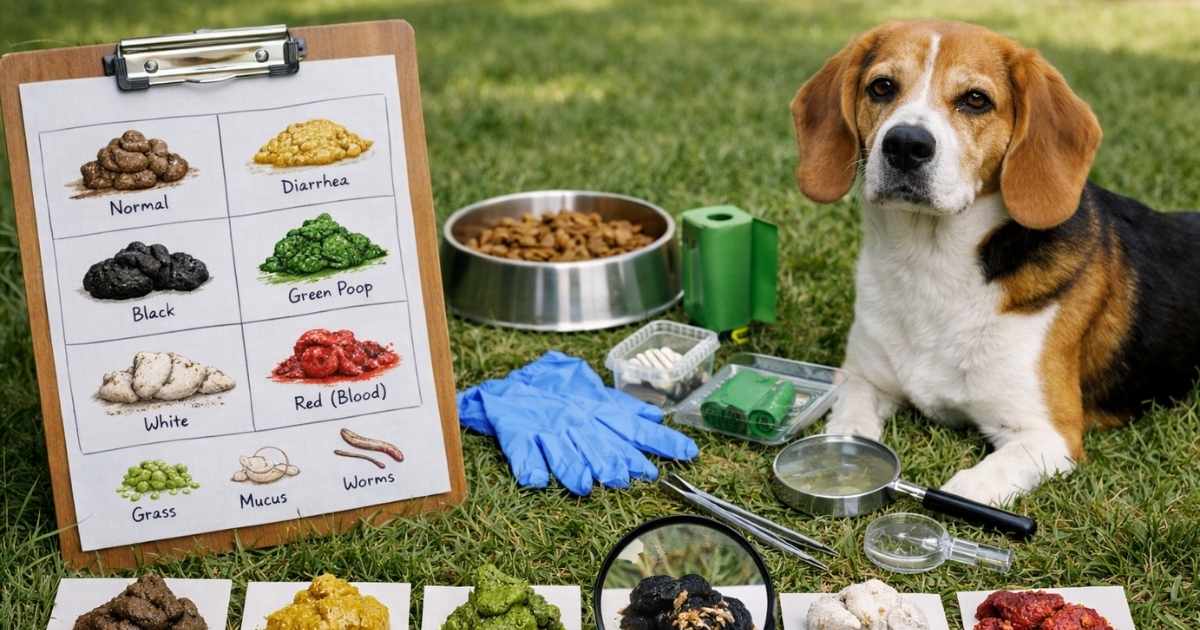
A healthy stool is typically chocolate brown, firm but not rock-hard, and holds its shape when you pick it up. It shouldn’t crumble, flatten, or leave much residue on the ground. The size should be proportional to what your dog ate. And the smell? Yes, it’ll smell. But a truly foul, overwhelming odor that makes you gag more than usual can actually signal a digestive problem.
Veterinarians often use a stool consistency guide that scores poop on a scale from 1 to 7. A score of 2 is the sweet spot: well-formed, segmented, and easy to pick up cleanly. A score of 1 is rock-hard pellets. A score of 7 is pure liquid. You want to live in that 2 zone.
Color matters too, and we’ll get deep into that in a moment. But for now, know that a healthy dog poop is consistently brown, with no visible slime, blood, worms, or odd materials mixed in. If your dog hits that mark every day, their gut is likely doing its job just fine.
Read More: Why Is My Dog Having Diarrhea? Causes, Warning Signs & When to Call the Vet
Common Poop Problems and What They Could Mean
Not every weird poop is an emergency. But some are. Knowing the difference can save your dog’s life, or at the very least, save you a stressful night of googling at 2 a.m.
1. Soft or Loose Stool
Soft poop that doesn’t quite hold its shape is one of the most common complaints dog owners bring up. It usually means something is slightly off in the digestive tract, but it’s not always serious.
A sudden diet change is one of the biggest culprits. If you switched your dog’s food too quickly, their gut microbiome didn’t get time to adjust. The result? Soft, unformed stool that smells worse than usual. Other common triggers include table scraps, stress, or a mild case of canine colitis, which is basically inflammation in the colon.
Soft stool that shows up once or twice and then goes back to normal usually isn’t a concern. But if it’s been going on for more than a day or two, that’s worth paying attention to.
2. Diarrhea (Watery or Unformed Stool)
Diarrhea hits fast and hard. One moment your dog is fine, the next they’re desperate to go outside every 20 minutes. Watery or completely unformed stool is your dog’s body trying to flush something out quickly.
The causes range from the mild to the genuinely serious. On the mild end, you’ve got dietary indiscretion, which is the fancy way of saying your dog ate something they shouldn’t have. On the serious end, you’re looking at things like parvovirus, giardia infection, intestinal parasites, or hemorrhagic gastroenteritis.
Parvovirus diarrhea in dogs is particularly dangerous, especially in puppies. It comes on fast, often with blood, and can be fatal without immediate treatment. If your dog is young and unvaccinated and starts having severe diarrhea, don’t wait.
Dehydration is the biggest short-term risk with diarrhea. If your dog also seems lethargic, isn’t drinking, or is vomiting alongside the diarrhea, call your vet the same day.
3. Hard, Dry, or Pellet-Like Stool (Constipation)
On the other end of the spectrum, you’ve got constipation. Your dog is straining, circling, or posturing to go but producing very little. What does come out is small, hard, and dry.
Dehydration constipation in dogs is surprisingly common and often overlooked. Dogs that don’t drink enough water throughout the day are much more prone to this. Lack of fiber, not enough exercise, or swallowing something that’s partially blocking the gut can all play a role too.
In older dogs, constipation that keeps coming back can be linked to an intestinal blockage, enlarged prostate, or even orthopedic pain that makes the squatting position uncomfortable. Foreign body ingestion in dogs is another reason stool can become impacted or difficult to pass.
If your dog hasn’t pooped in more than 48 hours, it’s time to call the vet rather than waiting it out.
What Poop Color Can Tell You About Your Dog’s Health
This is where things get really informative. Color changes in dog stool are often the first visible sign that something is going on internally. Here’s a quick breakdown:
Brown is normal. You already know this. Any shade of medium to dark brown is generally what you’re aiming for.
Black tarry dog stool is one of the more alarming colors and for good reason. It often indicates upper gastrointestinal bleeding in dogs, meaning blood is being digested as it passes through the system. This can point to stomach ulcers, tumors, or ingestion of blood-thinning substances. Melena in dogs is the clinical term for this and it warrants an urgent vet visit.
Red blood in dog poop looks different. It’s bright red and either coating the stool or mixed through it. Bright red blood usually means the bleeding is lower in the GI tract, such as the colon or rectum. Causes include colitis in dogs, anal gland problems in dogs, or trauma from straining. It’s less immediately dangerous than melena, but still needs to be checked out.
Yellow dog stool meaning often ties back to issues with the liver or bile. Bile flow obstruction in dogs can prevent proper fat digestion, which shows up as yellow, greasy-looking stool. Fat malabsorption in dogs and pancreatic insufficiency are also known to produce this color. Pale or gray stool tells a similar story about liver dysfunction.
Green dog poop after eating grass is fairly common and usually harmless if it happens occasionally. But persistent green stool can indicate a diet issue, intestinal inflammation, or that your dog is eating something that doesn’t agree with them regularly.
Orange stool can sometimes mean liver or bile duct issues, similar to yellow. White chalky stool in dogs that eat a raw diet is often from high bone content and isn’t usually dangerous. However, white stool in other contexts could signal a blockage or serious digestive issue.
What About Mucus in the Stool?
A little mucus in dog poop isn’t automatically a red flag. The intestines naturally produce mucus to help stool move through smoothly. But when you’re seeing a thick, slimy coating around every stool, or mucus mixed with blood, that’s your cue to pay closer attention.
Slimy dog poop coating usually points to large bowel issues. Stress-induced colitis in dogs is one of the most frequent causes. Dogs that have recently moved, had a new animal introduced to the home, or experienced any kind of disruption can develop colitis almost overnight. The colon gets irritated, and mucus production goes up.
Inflammatory bowel disease in dogs is another possibility. It’s a chronic condition where the digestive lining becomes persistently inflamed, leading to ongoing mucus, soft stool, and sometimes blood. It requires a proper diagnosis and ongoing management, not just a dietary change and a prayer.
If mucus shows up once and then disappears, monitor your dog but don’t panic. If it’s a regular occurrence, get a stool sample checked.
Seeing Worms or Foreign Objects? Take It Seriously.
Opening a poop bag and finding something wriggling inside it is one of those experiences you don’t forget. White worms in dog poop are typically tapeworm segments, which look like small grains of rice. You might also see roundworms, which look like spaghetti strands, or notice signs consistent with hookworm symptoms in dogs, even if the worms themselves aren’t visible.
Dog stool with parasites needs to be tested and treated. These infections don’t resolve on their own and can spread to other animals and, in some cases, to humans too. Roundworms in puppies are especially common and can affect the puppy’s development if left untreated.
Giardia infection in dogs is a bit different. You won’t see the organism in the stool because it’s microscopic. But the stool will often be greasy, foul-smelling, and soft or watery. Fecal testing for dogs is the only way to confirm it.
Foreign objects in dog stool are also worth noting. If you see pieces of plastic, fabric, bone fragments, or anything that clearly shouldn’t be there, your dog has been eating things they shouldn’t. Sometimes those objects pass safely. Other times, they cause a partial blockage that leads to vomiting, straining, and pain. Keep an eye on what your dog has access to.
How Often Should Your Dog Be Pooping?
Dog poop frequency per day varies by age, size, diet, and activity level. Most adult dogs poop once or twice a day. Some perfectly healthy dogs go three times a day, especially if they’re fed multiple meals or eat a high-fiber diet.
Puppies go more often, sometimes four to five times a day, because their digestive systems are still maturing and they’re eating more frequently relative to their body size.
If your dog suddenly goes from once a day to four or five times with loose stool, that’s a notable change. Similarly, if a dog that normally goes twice a day stops going entirely, that’s also worth attention. You know your dog’s habits better than anyone. Trust your instincts when something shifts.
When Should You Call the Vet?
Not every off-colored poop is an emergency, but some situations genuinely are. Here’s a practical guide to knowing when to call.
Call the vet right away if you see black tarry stool, which signals internal bleeding. Also call immediately if there’s a large amount of bright red blood in the poop, if your dog is vomiting and has diarrhea at the same time, or if your puppy is having severe diarrhea and seems lethargic or unvaccinated. These can be signs of parvovirus or hemorrhagic gastroenteritis, both of which deteriorate fast.
Schedule a same-day or next-day appointment if diarrhea has lasted more than 48 hours, if your dog hasn’t pooped in two or more days, if you see worms or suspected parasites in the stool, or if mucus with blood appears repeatedly.
Monitor and observe if the stool is slightly soft but your dog is otherwise acting normally, eating well, and staying hydrated. Also keep watching if green poop shows up once after a grass-eating episode. One episode of mild disruption often resolves on its own.
Bring a stool sample to the vet when you go. Fresh is best, ideally less than 12 hours old. Your vet can run fecal testing to check for parasites, bacterial infections, and other issues that aren’t visible to the naked eye. Veterinary diagnostic imaging for GI issues may also be recommended if a blockage or more serious condition is suspected.
FAQ’s
What does healthy dog poop look like?
It should be firm, chocolate brown, and easy to pick up without leaving residue. It should hold its shape without being rock-hard.
What does it mean if my dog’s poop is black?
Black, tarry stool often indicates digested blood from somewhere in the upper digestive tract. It needs prompt veterinary attention.
Why does my dog’s poop have mucus?
A small amount of mucus is normal. Consistent or heavy mucus, especially with blood, usually signals colitis or intestinal inflammation.
How often should a dog poop per day?
Most adult dogs poop once or twice a day. Puppies may go up to four or five times. Frequency depends on diet, age, and activity level.
When should I take my dog to the vet for poop issues?
Go immediately for black stool or heavy bleeding. Schedule soon for diarrhea lasting more than 48 hours, no poop for two days, or visible worms in the stool.

Caleb Ford is pet enthusiast and content strategist who blends real-world pet care experience with digital expertise. He’s known for crafting reliable, research-based articles that inform and inspire pet owners. Caleb’s approach centers on transparency, compassion, and trust key pillars of authentic EEAT-driven storytelling in the pet industry.