
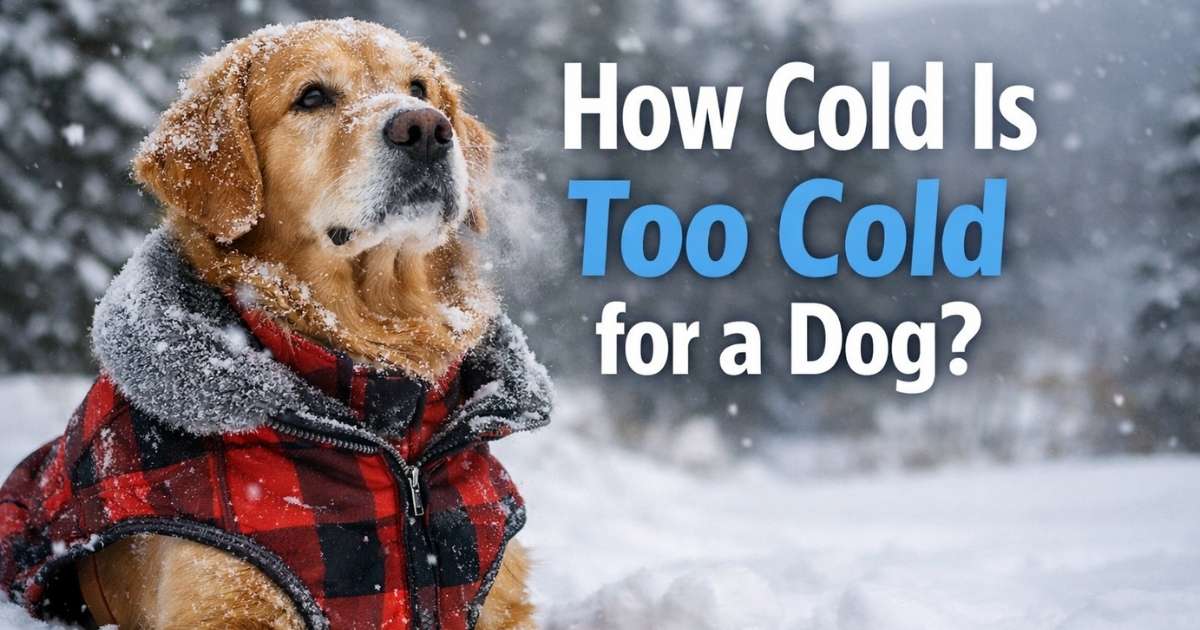
Winter hits hard. And if you’re a dog owner, you’ve probably stood at the door on a freezing morning, leash in hand, wondering, is it actually safe to take my dog outside right now? That question matters more than most people realize. How cold is too cold for a dog isn’t a one-size-fits-all answer, and getting it wrong can lead to real health risks like frostbite and hypothermia.
This guide breaks it all down for you, temperatures, breed differences, warning signs, and exactly when your dog needs a coat. Let’s get into it.
How Cold Is Too Cold for a Dog?
Here’s the honest truth, there’s no single temperature that’s dangerous for every dog. A Siberian Husky rolling around in two feet of snow is having the time of his life. A Chihuahua shivering on your front step at 50°F is already unhappy. The threshold depends on the individual dog, and understanding that is the first step to keeping yours safe.
That said, most veterinary experts agree on some general benchmarks. Temperatures above 45°F are usually fine for the majority of healthy adult dogs. Once you dip below 32°F, the risks start climbing for many breeds. And when temperatures drop to 20°F or below, even cold-hardy dogs face genuine danger if they’re outside for extended periods.
You can’t just check the thermometer and call it a day, though. Wind chill, moisture, your dog’s coat type, age, size, and health status all factor into how well they handle the cold. Think of it like this, 35°F on a dry, calm day feels completely different from 35°F in freezing rain with a 20 mph wind. For your dog, that difference could be the line between comfortable and dangerous.
Also Read: Are Roses Toxic to Cats? What Every Pet Owner Should Know?
Why Cold Tolerance Varies Between Dogs
Every dog is built differently, and that’s not just a cute saying, it’s physiology. Some dogs were literally bred to work in Arctic conditions. Others were developed in warm Mediterranean climates and have never evolved a thermal defense mechanism beyond a thin, short coat.
Coat type is probably the biggest factor. Dogs with thick double coats, think Huskies, Malamutes, Bernese Mountain Dogs, carry built-in insulation. Their undercoat traps warm air close to the skin, acting almost like a natural down jacket. On the flip side, short-haired breeds like Greyhounds, Whippets, Boxers, and Dobermans have almost no buffer against the cold. They feel temperature drops fast, and they feel them sharply.
Body fat plays a role too. Lean, athletic breeds lose body heat faster than dogs with a bit more natural padding. Age matters enormously as well, puppies can’t regulate their body temperature effectively yet, and senior dogs often struggle with circulation and joint pain that cold weather makes considerably worse.
Health conditions like hypothyroidism, heart disease, kidney issues, and diabetes can all reduce a dog’s ability to tolerate cold. If your dog has any underlying condition, talk to your vet before making assumptions about how much winter weather they can handle.
Temperature Guidelines: When Cold Becomes Dangerous
Let’s put some actual numbers to this, because vague guidelines don’t help when you’re standing at the door at 7 a.m. trying to decide whether to bundle up your dog or skip the long walk.
Is 45°F Too Cold for Dogs?
For most healthy, medium-to-large adult dogs with a decent coat, 45°F is perfectly manageable. They’ll be comfortable on a regular walk and won’t need extra protection. However, for small breeds, short-haired dogs, puppies, and senior dogs, 45°F starts to feel genuinely chilly. These dogs may benefit from a lightweight sweater at this temperature, especially if you’re planning a walk longer than 15 to 20 minutes.
In fact, is 45 degrees too cold for a short-haired dog? Honestly, it’s borderline. A thin-coated dog like a Greyhound or a Miniature Pinscher isn’t going to be comfortable without some protection at that temperature, especially if there’s any wind. Don’t wait until they’re shivering to act.
What Happens Below 32°F and Freezing Temperatures?
Below freezing is where things get genuinely risky for a much wider range of dogs. At 32°F and below, water freezes, and that includes the wet ground your dog is walking on, the moisture on their paw pads, and the damp fur around their legs and belly.
Frostbite in dogs becomes a real possibility at these temperatures, particularly in exposed areas like the ears, tail, nose, and paw pads. The blood vessels in these areas constrict in the cold to preserve core body heat, which means those extremities are left vulnerable. Even 20 to 30 minutes outside in freezing temperatures can cause tissue damage in these areas if the dog isn’t properly protected.
The good news is that most dogs will signal their discomfort before serious harm sets in, but only if you know what to look for. More on that shortly.
Is 20°F Unsafe for Most Dogs?
Short answer: yes, for most dogs. At 20°F, you’re dealing with conditions that are unsafe for extended outdoor exposure across virtually all breeds except the most cold-adapted working dogs. Even thick-coated breeds like German Shepherds and Labrador Retrievers should have their outdoor time limited and monitored carefully at this temperature.
If you’re in an area that regularly drops to 20°F or below, including during Marietta, GA winter dog care considerations where cold snaps can surprise residents, keeping outdoor bathroom breaks brief and purposeful is the right call. We’re talking five to ten minutes max, then back inside. Dog cold tolerance at this level is seriously strained, and the risks of hypothermia and frostbite spike fast.
Breed and Coat Type: Do Some Dogs Handle Cold Better?
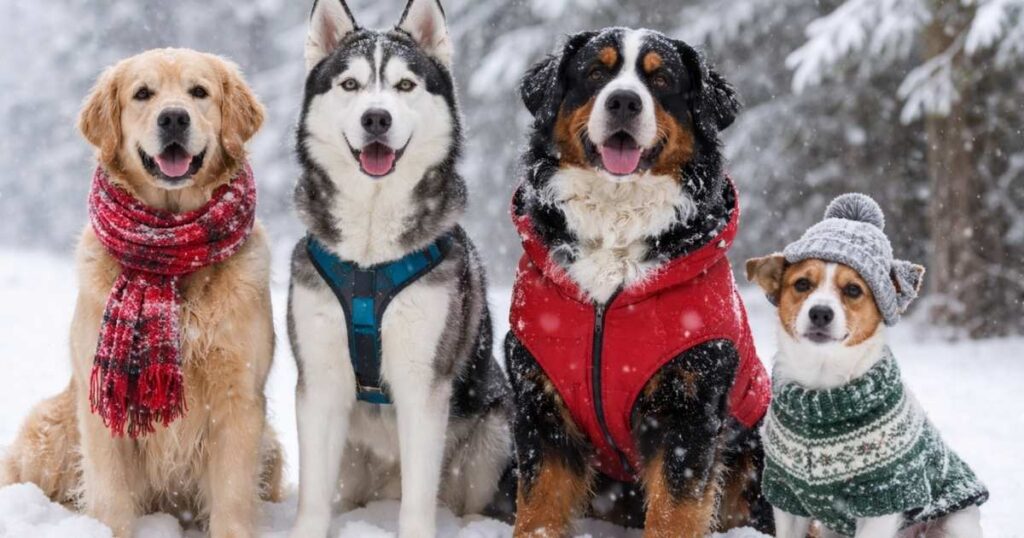
Absolutely, yes. Breed matters enormously when it comes to winter weather safety for dogs, and it’s one of the most important variables you can assess as an owner.
Thick Double-Coated Breeds and Winter Tolerance
Breeds like Siberian Huskies, Alaskan Malamutes, Newfoundlands, Saint Bernards, and Samoyeds were purpose-built for cold climates. Their double coats trap insulating air, repel moisture, and protect them in ways that genuinely impress even in severe conditions. A healthy Husky can comfortably handle temperatures well below 0°F when acclimated and active.
But here’s something worth noting, do Huskies need coats in winter? Generally, no. Putting a coat on a double-coated breed can actually interfere with their natural insulation and cause overheating. Their coats work through a specific layering system, and covering them up disrupts that. Nature already handled their winter wardrobe.
Other cold-tolerant breeds include the Bernese Mountain Dog, Akita, and Norwegian Elkhound. These dogs were selectively developed to withstand exactly the kind of conditions that would leave less adapted breeds shaking on the sidewalk.
Short-Haired and Thin-Coated Dogs in Cold Weather
Now let’s talk about the breeds that genuinely need your help in winter. Do short-haired dogs need sweaters? For many of them, absolutely. Greyhounds, Whippets, Italian Greyhounds, Boxers, Vizslas, Weimaraners, and Doberman Pinschers have little to no undercoat. Their protection from the cold is minimal, and the transition from a warm house to cold outdoor air hits them hard.
Thin-coated dog cold sensitivity is also common in breeds like Chihuahuas, Dachshunds, and French Bulldogs. These dogs aren’t being dramatic when they resist going outside in winter. They’re communicating genuine physical discomfort. A well-fitted sweater or insulated dog jacket isn’t a fashion accessory for these breeds, it’s a necessity.
Do Greyhounds get cold easily? Yes, faster than almost any other breed their size. Despite being athletic and lean, they have minimal body fat and a single-layer, ultra-short coat that provides almost zero thermal protection.
Size and Body Weight: Why Small Dogs Get Colder Faster
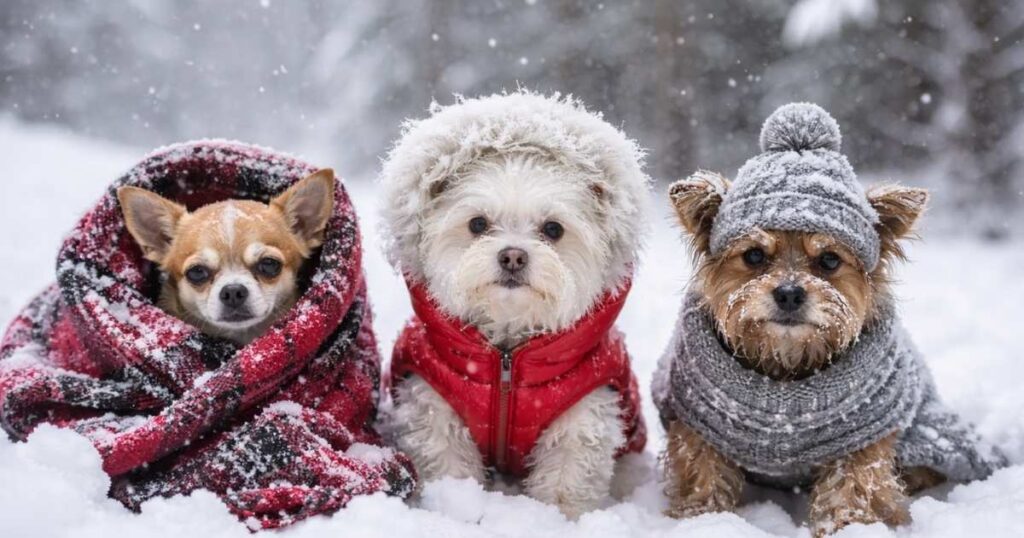
It comes down to surface area. Smaller dogs lose body heat more rapidly because they have a higher ratio of skin surface to body volume. In other words, more of their body is exposed to the cold relative to how much heat they can generate and retain. A tiny Toy Poodle standing in the snow is losing heat from all sides at a rate a Labrador Retriever simply doesn’t experience.
Small breed cold risk is well-documented in veterinary literature. Breeds like Yorkies, Maltese, Shih Tzus, Pomeranians, and Chihuahuas need extra protection in cold weather, not just a quick sweater toss, but genuinely thoughtful preparation. Boots to protect their paws from ice and salt, coats that actually cover their chest and belly, and careful attention to how long they’re outside.
Puppies and Temperature Regulation
Puppies are in a category of their own when it comes to cold weather. How cold is too cold for puppies? Any sustained exposure below 45°F should be approached with caution for very young puppies. Their thermoregulatory systems aren’t fully developed yet, meaning their bodies can’t maintain stable internal temperatures the way adult dogs can.
Young puppies also tend to have very little body fat and thin coats regardless of what breed they’ll eventually become. Until a puppy is several months old and has developed a full, mature coat, treat them like small, thin-coated dogs in terms of cold weather precautions. Short outdoor trips, warm indoor spaces, and close observation are the order of the day during cold months.
Senior Dogs and Cold Weather Risks
Elderly dog winter protection deserves serious attention. Older dogs face a double challenge in cold weather, their circulation slows with age, making it harder to maintain body warmth, and many of them deal with arthritis or joint conditions that cold temperatures actively worsen.
Senior dogs are also more likely to have health conditions that reduce their resilience to cold. Should senior dogs wear winter coats? In most cases, yes, even breeds that wouldn’t typically need one. The extra layer helps maintain body warmth and reduces the cardiovascular strain of working to stay warm in cold air. Keep walks shorter, watch their gait carefully on icy surfaces, and bring them inside promptly after outdoor time.
Weather Factors Beyond Temperature
Temperature alone doesn’t tell the whole story. Several other weather variables can make conditions far more dangerous than the thermometer suggests, and ignoring them is how dogs get hurt.
Wind Chill and Damp Conditions
Wind chill and damp weather dog safety are two of the most underestimated factors in cold weather risks for dogs. Wind strips away the layer of warm air that sits close to your dog’s skin and fur, dramatically accelerating heat loss. A day that reads 35°F on the thermometer can feel closer to 20°F once you factor in a 15 mph wind.
Is wind chill dangerous for dogs? Definitely. It’s dangerous for the same reason it’s dangerous for humans, it increases the rate at which your body loses heat. And for dogs with thin coats or small bodies, that acceleration can push them into danger territory much faster than you’d expect.
Damp conditions, rain, sleet, wet snow, high humidity, compound the problem further. Wet fur loses its insulating properties. A dog that would be fine in dry 35°F conditions may struggle significantly in wet 40°F conditions. Should dogs stay inside during freezing rain? For short-coated, small, elderly, or young dogs, yes, absolutely. Limit exposure to necessities only.
Snow Depth, Ice, and Freezing Rain Hazards
Snow looks fun, and for many dogs it genuinely is. But deep snow creates real problems for smaller breeds. Is deep snow dangerous for small dogs? Yes, deep snow can force them to expend enormous energy just to move, cause them to sink into drifts that reach their bellies and chests, and result in rapid heat loss from their core.
Ice is arguably more dangerous than snow for most dogs. It hides under snow, causes slips and falls that can injure paws and joints, and often gets treated with road salt and chemical deicers that are toxic if licked off paws. Can dogs get frostbite on their paws? Yes, and icy surfaces are prime conditions for it. Protecting dog paws from ice and chemical deicers is one of the most important winter care steps you can take.
Freezing rain is the worst combination of wet and cold. It coats fur rapidly, makes every surface treacherous, and drops body temperatures quickly. Keep all dogs inside during active freezing rain unless absolutely necessary.
Signs Your Dog Is Too Cold
Knowing what to watch for can make the difference between catching a problem early and dealing with a veterinary emergency. Dogs communicate discomfort clearly, you just need to know the language.
Early Warning Signs of Discomfort
The first signals that your dog is getting too cold tend to be subtle but readable. Dog shivering in cold is the most obvious, it’s their body’s involuntary response to generate warmth through muscle movement, just like humans. If you see shivering, it’s time to head inside, no debate.
Dog lifting paws in snow is another clear signal. When a dog repeatedly picks up their feet or refuses to put weight on them, the ground is too cold for their paw pads. This can happen even before frostbite risk kicks in, their pads are sensitive, and cold plus ice plus potentially treated pavement is a recipe for pain.
Other early signs include tucking the tail between the legs, hunching the back, looking reluctant or slowing down during walks, seeking shelter or trying to turn back toward home, and whining. These are all your dog trying to tell you something. Listen to them.
Symptoms of Hypothermia and Frostbite
If early warning signs are missed and a dog remains in cold conditions too long, the situation escalates. What are signs of hypothermia in dogs? The progression typically goes like this, intense shivering that eventually stops (which is actually a bad sign, not a good one), lethargy and weakness, difficulty walking or stumbling, pale or bluish gums, slowed breathing, and in severe cases, loss of consciousness.
What happens if a dog gets hypothermia? Their body temperature drops below the safe range (normal is 101-102.5°F), their organ systems begin to slow, and without prompt veterinary treatment, it can be fatal. How do I warm up a cold dog safely? Move them to a warm indoor space immediately, wrap them in dry blankets, and apply warm (not hot) water bottles wrapped in towels to their core. Contact your vet right away, do not assume warming them up at home is sufficient if symptoms are serious.
Frostbite presents differently. How quickly can dogs get frostbite? In temperatures below 32°F with wind or moisture, tissue damage can begin in 30 minutes or less for vulnerable extremities. Frostbitten skin initially looks pale, grey, or bluish, and feels hard or waxy to the touch. As it rewarms, it turns red and may blister. It’s extremely painful. Areas to check include the ear tips, tail, paw pads, and any skin exposed between fur.
When Should Your Dog Wear a Winter Coat?
The general rule of thumb is this: if you’d be chilly in a light jacket, your dog probably needs a coat. More specifically, when should I put a jacket on my dog? Consider a coat when temperatures drop below 45°F for small or thin-coated dogs, and below 32°F for medium dogs without a thick undercoat.
At what temperature do dogs need coats? A practical breakdown looks like this, above 45°F, most healthy dogs are fine without one. Between 32°F and 45°F, small breeds, lean dogs, puppies, and seniors need coverage. Below 32°F, coats are appropriate for most dogs except cold-adapted breeds. Below 20°F, virtually every dog that goes outside needs protection.
Can dogs overheat in winter coats indoors? Yes, they can. Remove the coat when you come inside. An overheated dog is just as stressed as a cold one. Never leave a coat on an unsupervised dog, as it can become a restriction or entanglement hazard.
Choosing the Right Coat, Sweater, and Boot Protection
A dog sweater temperature guide typically recommends lightweight knit sweaters for temperatures around 40°F to 50°F for sensitive dogs, and heavier insulated dog jackets or waterproof dog coats for temperatures at or below freezing. The waterproof dog coat is especially valuable in wet conditions, a coat that absorbs moisture rather than repels it will make your dog colder, not warmer.
How do I measure my dog for a coat? Measure the length of their back from the base of the neck to the base of the tail, then measure the widest part of their chest. Use these two measurements together, length and girth, to find the right coat size using the brand’s specific dog coat size guide.
Dog booties for winter serve a dual purpose: they insulate the paws against cold and protect them from ice, snow, salt, and chemical deicers. Is snow harmful to dog paws? It can be, particularly when mixed with road salt. Boots are the most effective protection, though some dogs resist them at first. Give your dog time to adjust by introducing boots indoors before venturing outside.
How long can dogs stay outside in winter? In moderate cold (35°F to 45°F), most healthy adult dogs can tolerate 30 minutes to an hour with proper monitoring. Below freezing, reduce this to 15 to 20 minutes max for most dogs. At 20°F and below, limit outdoor exposure to quick bathroom breaks only. Cold weather potty breaks should be short and purposeful, warm, dry shelter should always be easily accessible.
For indoor exercise for dogs in winter, consider puzzle feeders, stair climbing, hallway fetch, treadmill walking, or indoor agility setups. Keeping your dog mentally and physically stimulated on days too cold to walk isn’t just a nice-to-have, it’s part of good cold weather dog care.
FAQ’s
What temperature is unsafe for dogs to be outside?
Below 32°F is risky for many breeds, and below 20°F is unsafe for nearly all dogs without supervised, limited exposure and proper winter gear.
Can dogs get frostbite on their paws from snow and ice?
Yes. Frostbite can develop in under 30 minutes in freezing temperatures with moisture or wind, especially on paw pads, ear tips, and tails.
Do small dogs really get colder faster than large dogs?
They do. Small dogs have a higher surface-area-to-body-mass ratio, which means they lose heat more rapidly and need extra protection in cold weather.
Should senior dogs wear coats in winter?
Yes, in most cases. Older dogs have reduced circulation and are more susceptible to joint pain and cold-related health problems, making a coat a smart precaution.
How do I know if my dog is too cold during a walk?
Watch for shivering, paw lifting, hunched posture, tail tucking, reluctance to move, or whining. Any of these signals means it’s time to head inside immediately.

Caleb Ford is pet enthusiast and content strategist who blends real-world pet care experience with digital expertise. He’s known for crafting reliable, research-based articles that inform and inspire pet owners. Caleb’s approach centers on transparency, compassion, and trust key pillars of authentic EEAT-driven storytelling in the pet industry.