
If your dog is acting off after her last heat cycle, something might be seriously wrong. She’s drinking more water than usual, seems exhausted, and maybe you’ve noticed some unusual discharge. These aren’t things to brush off. They could be early warning signs of pyometra, one of the most dangerous and time-sensitive conditions an unspayed female dog can face.
This isn’t rare. In fact, it affects a significant number of intact female dogs, especially as they get older. And here’s the thing: many owners don’t recognize it until the condition has already progressed. That’s why knowing what to look for and when to call your vet can genuinely save your dog’s life.
Why Pyometra in Dogs Happens
Pyometra doesn’t just appear out of nowhere. It develops because of a specific chain of biological events that start with your dog’s reproductive cycle. Understanding the “why” behind it makes the symptoms make a lot more sense.
Hormonal Influence After Heat Cycles
Every time an unspayed female dog goes through a heat cycle, her body goes through significant hormonal shifts. Progesterone levels rise after ovulation to prepare the uterus for a potential pregnancy. The uterine lining thickens and the glands inside it become more active, producing fluid to nourish a fertilized egg.
Now here’s the problem. If no pregnancy occurs, the uterus still goes through those changes cycle after cycle. Over time, the lining can become excessively thickened, a condition called cystic endometrial hyperplasia. This creates a warm, fluid-filled environment that bacteria absolutely love. The uterus also becomes less capable of fighting off infection because progesterone suppresses the local immune response. So what starts as a hormonal quirk becomes a breeding ground for serious trouble.
Middle-aged and older female dogs are especially vulnerable because these hormonal effects accumulate over multiple cycles. But younger dogs aren’t completely off the hook. Pyometra can develop after just one or two cycles in some cases.
Read More: What is Valley Fever in Pets?
Bacterial Introduction and Rapid Growth
Once the uterine environment is compromised, bacteria find their way in through the cervix, which is naturally open during and just after heat. The most common culprit is Escherichia coli, the same bacteria responsible for many urinary tract infections. Other organisms can be involved too, but E. coli shows up in the majority of pyometra cases.
Once inside, these bacteria multiply rapidly in the thickened, fluid-rich uterine lining. The body mounts an immune response, pus accumulates, and the uterus begins to fill. This is the point where the condition becomes a genuine emergency. The infection can spread, toxins can enter the bloodstream, and without treatment, the outcome is fatal.
Signs of Pyometra in Dogs
This is where things get practical. Knowing what pyometra actually looks like on a day-to-day basis helps you catch it before it spirals.
Behavioral and Physical Changes
The early signs can be subtle, which is part of what makes this condition so deceptive. Your dog might seem a little “off.” Less energetic, less interested in her food, maybe drinking noticeably more water than usual. Excessive thirst and frequent urination are actually classic early indicators, because the bacteria and toxins affect how the kidneys concentrate urine.
You might also notice her licking at her vulva more than normal. If the cervix is open, which is called open pyometra, you’ll likely see a discharge that ranges from cloudy and yellowish to brownish-red or even greenish. It can have a foul smell. Some owners mistake this for a normal post-heat discharge, which is an understandable but dangerous assumption.
Physical changes can include a visibly swollen or distended abdomen, especially if the uterus has filled considerably. The dog may appear uncomfortable, reluctant to move, or show signs of abdominal pain when touched. Vomiting can occur. So can a mild fever, though not always.
How Symptoms Progress Over Time
Here’s where timing becomes critical. Pyometra doesn’t stay subtle for long. In open pyometra, the discharge gives you a visible clue and there’s at least some drainage occurring. But in closed pyometra, the cervix remains shut. Nothing escapes. The pus builds up internally, pressure increases, and the risk of uterine rupture becomes very real.
Within days, what started as lethargy and increased thirst can escalate into severe dehydration, rapid deterioration, and shock. Dogs with closed pyometra often decline faster and look worse sooner than those with the open form. Either way, both require emergency attention. There’s no “wait and see” option with this condition.
How Pyometra in Dogs Is Identified
Recognizing the symptoms at home is the first step. Getting a confirmed diagnosis is what happens next, and your vet will use a combination of methods to get there quickly.
Physical Examination and Initial Evaluation
When you bring your dog in, your vet will start with a thorough hands-on examination. They’ll assess her overall condition, check for signs of pain or distension in the abdomen, take her temperature, and ask you about her recent heat cycle. This timing is actually a key diagnostic clue. Pyometra almost always develops within two to eight weeks after a heat cycle, so that history matters enormously.
If there’s visible discharge, your vet will note its color, consistency, and smell. Blood tests will likely be ordered right away. These typically show an elevated white blood cell count, which signals a significant infection is present. Kidney function markers may also be affected, which helps gauge how far the infection has progressed systemically.
Diagnostic Imaging and Laboratory Testing
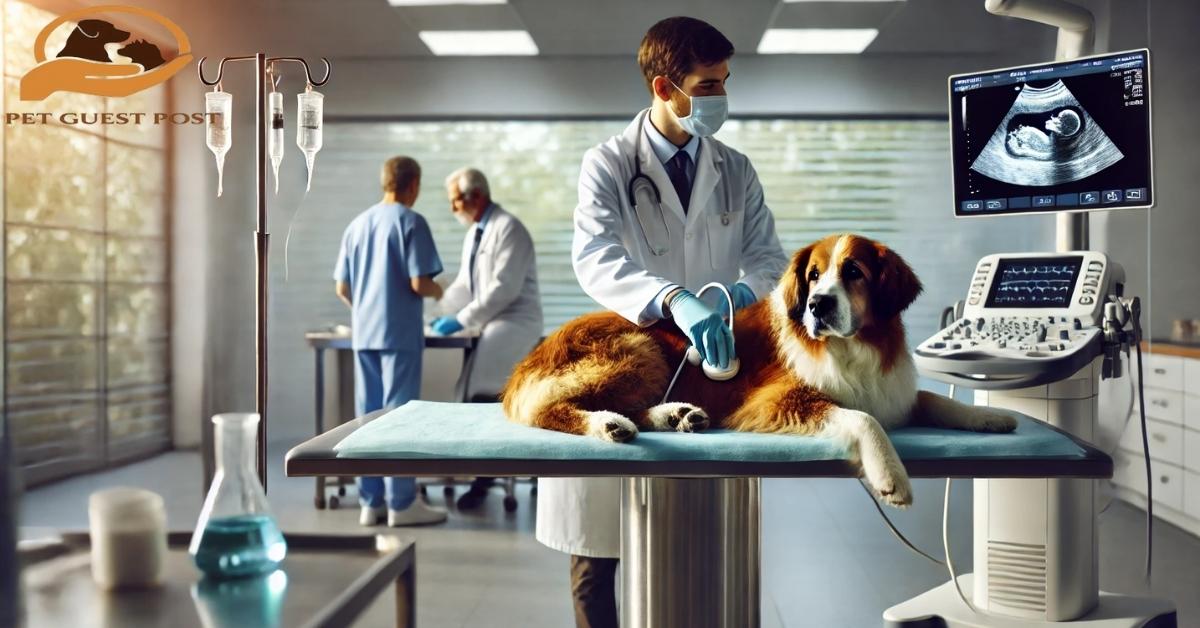
Imaging is what really confirms the diagnosis. An abdominal ultrasound is the most reliable tool for visualizing a fluid-filled, enlarged uterus. It gives the vet a clear picture of how distended the uterus is and helps rule out other conditions like pregnancy or a bladder issue.
X-rays can also be used and sometimes show a dramatically enlarged uterine structure in the abdomen. Together with blood work and the clinical picture, these tools allow the vet to confirm pyometra and make decisions about the most appropriate course of treatment without delay.
Why Pyometra in Dogs Requires Immediate Veterinary Attention
Some conditions allow a day or two to monitor. Pyometra is not one of them. This is an emergency, full stop.
Systemic Impact of the Infection
When bacteria multiply unchecked inside the uterus, they don’t stay contained. Bacterial toxins and byproducts leak into the bloodstream. This leads to a systemic response known as sepsis, where the body’s immune system begins to work against itself in a desperate attempt to fight the infection.
Sepsis affects multiple organ systems at once. The kidneys struggle to filter toxins properly. The liver becomes taxed. Blood pressure can drop dangerously. Without aggressive veterinary intervention, septic shock follows, and at that stage, even the best treatment may not be enough. This is why dogs who seem “just a little off” on a Monday can be in critical condition by Wednesday.
Closed vs. Open Pyometra Risks
It’s worth understanding the difference between these two forms because they carry different levels of immediate danger. In open pyometra, the cervix allows pus to drain outward. This provides a visible symptom and reduces internal pressure somewhat, though the infection is still life-threatening.
Closed pyometra is more treacherous. There’s no external discharge to tip you off. The pus accumulates silently inside a sealed uterus. The risk of rupture is much higher. If the uterus ruptures, the infected contents spill into the abdominal cavity, causing peritonitis, which is rapidly fatal. Dogs with closed pyometra often present in worse condition simply because the internal buildup has been occurring without detection.
Both forms demand urgent surgical treatment. The standard and most effective intervention is an emergency ovariohysterectomy, which means surgical removal of the uterus and ovaries. This removes the source of the infection entirely. Medical management exists as an option in select cases, particularly for breeding dogs, but it carries significant risks and a high recurrence rate. Most vets strongly recommend surgery as the safest and most definitive solution.
Supporting Your Dog’s Health Moving Forward
If your dog has gone through treatment for pyometra and come out the other side, that’s genuinely something to be relieved about. Recovery from surgery, when caught in time, tends to go well. Most dogs bounce back within a few weeks with proper post-operative care, antibiotics, and rest.
Going forward, the most powerful thing you can do is have a conversation with your vet about spaying if your dog isn’t already. Spaying eliminates the risk of pyometra entirely because there’s no uterus left to become infected. For dogs who haven’t yet developed the condition, early spaying is one of the most straightforward preventive steps available.
If your dog is a working or breeding animal and spaying isn’t on the table right now, close monitoring after every heat cycle is essential. Know the timeline. Know what to watch for. Keep your vet’s contact information somewhere easy to reach.
And if something feels wrong, trust that instinct. You know your dog. A vet visit is always worth it when you’re dealing with a condition that moves this fast.
FAQ’s
What is pyometra in dogs?
Pyometra is a serious uterine infection that causes pus to accumulate inside the uterus of an unspayed female dog. It’s a life-threatening condition requiring urgent veterinary care.
Can a dog survive pyometra without surgery?
Survival without surgery is unlikely in most cases. Emergency surgical removal of the uterus is the most reliable treatment, though medical options exist in very limited circumstances.
How soon after heat does pyometra develop?
Pyometra typically develops within two to eight weeks after a heat cycle, when progesterone levels are still elevated and the uterus is most vulnerable to infection.
What does pyometra discharge look like?
In open pyometra, the discharge is often cloudy, yellowish, brownish-red, or greenish with a foul odor. Some owners mistake it for normal post-heat discharge, which can delay treatment.
Does spaying prevent pyometra?
Yes, completely. Spaying removes the uterus and ovaries, eliminating any possibility of pyometra. It’s the most effective long-term preventive measure available for intact female dogs.

Caleb Ford is pet enthusiast and content strategist who blends real-world pet care experience with digital expertise. He’s known for crafting reliable, research-based articles that inform and inspire pet owners. Caleb’s approach centers on transparency, compassion, and trust key pillars of authentic EEAT-driven storytelling in the pet industry.